Limb Deformity Correction in Ahmedabad
What Is Limb Deformity Correction?
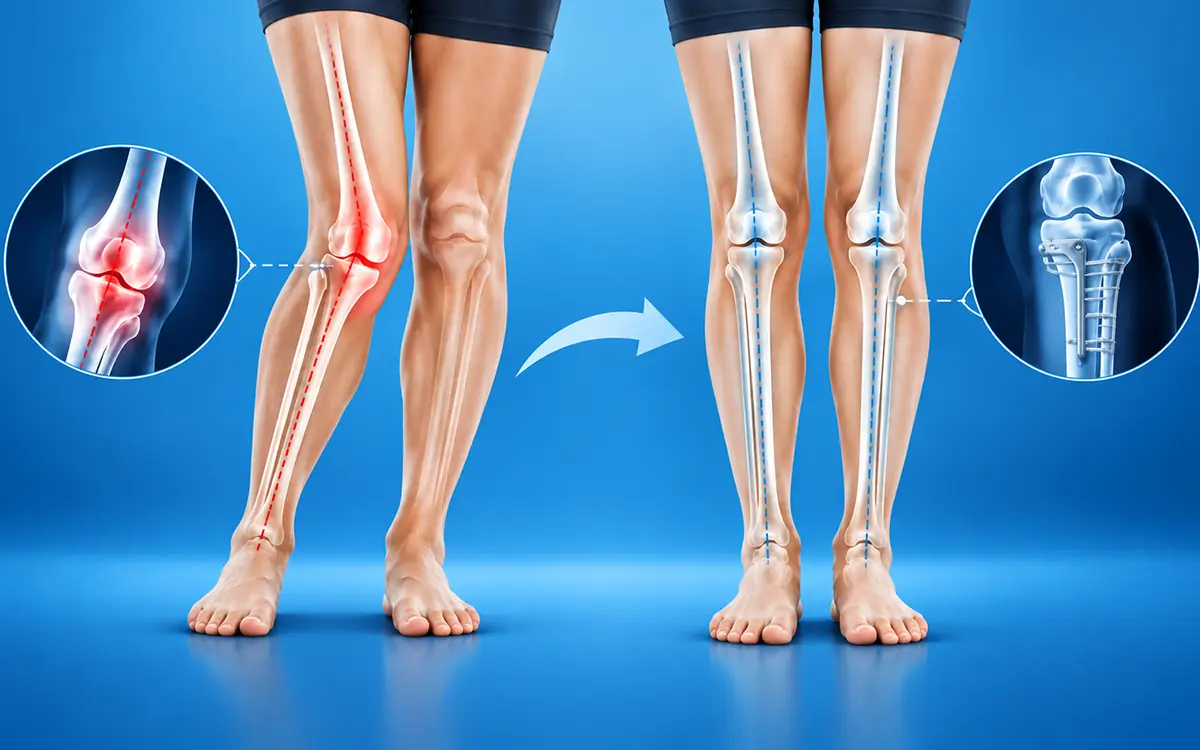
Limb deformity correction is treatment that straightens a bowed, knocked or angled limb, or evens out a difference in leg length. It can be needed because of a condition present from birth, a growth problem, an old fracture that healed in a poor position, or arthritis that has bent the joint over time. Treatment ranges from bracing and monitoring to surgery, depending on the cause and severity.
Common Causes of Limb Deformity
- Bow legs or knock knees, either a normal growth stage in children or a condition that needs treatment
- Rickets or other bone growth disorders
- An old fracture that healed in a bent position (malunion)
- Growth plate injury affecting how a bone grows afterward
- Arthritis that has slowly bent a knee or other joint
- Limb length difference, from birth or after an injury
Signs You May Need an Assessment
- A limb that looks noticeably bowed, knocked or twisted
- One leg appearing shorter than the other
- Uneven wear on the soles of your shoes
- A limp that comes from an uneven limb rather than pain
- Joint pain linked to the way a knee or leg is angled
- A deformity that is getting worse rather than improving
How Limb Deformities Are Treated
- Observation. In young children, mild bowing is often normal and is simply watched over time.
- Bracing. Can help guide growth in some childhood conditions.
- Shoe inserts. Can help manage a mild limb length difference.
- Guided growth surgery. A small procedure in growing children that gently guides the bone to straighten as the child grows.
- Osteotomy. A surgery where the bone is carefully cut and repositioned, then fixed with plates, screws or an external frame, to correct the angle.
- Limb lengthening. Gradual lengthening of a bone using a frame or an internal device, for significant length differences.
How Deformity Correction Surgery Works
- Detailed X-rays and measurements of the limb are taken to plan the exact correction needed.
- Under anaesthesia, the bone is cut at the planned point.
- The bone is repositioned to the corrected angle or length.
- The correction is held in place with plates, screws, a rod, or an external frame, depending on the case.
- The limb is protected while the bone heals in its new position.
For gradual correction, such as limb lengthening, the adjustment happens slowly over weeks using a frame, rather than all at once in surgery.
Recovery After Deformity Correction
Recovery time varies widely depending on the type of correction. A guided growth procedure in a child needs only a short recovery. An osteotomy with plates may need 6 to 12 weeks of limited weight bearing. Limb lengthening is the longest process, often taking several months of frame wear and physiotherapy. Your surgeon will give you a timeline specific to your case.
Risks
- Infection, especially around external frame pins
- Delayed bone healing
- Nerve or blood vessel injury
- Stiffness of nearby joints
- The correction not fully achieving the planned result
- Risks linked to anaesthesia
Why Choose OrthoD Hospital
- Careful measurement and planning before any correction is advised
- Treatment matched to whether the deformity is in a growing child or a fully grown adult
- Clear explanation of the timeline, since these corrections often take longer than standard fracture surgery
Deformity Correction Cost
Cost varies greatly depending on the type of correction, whether an external frame or internal implants are used, and the length of treatment. A written estimate is given after assessment and imaging.
Frequently Asked Questions
Is bow leg always a problem that needs treatment?
No. In young children, mild bow legs are often a normal stage of growth. Treatment is considered only if it is severe, one-sided, or not improving with age.
Can a limb deformity be corrected in an adult?
Yes, through osteotomy surgery or limb lengthening, depending on the cause and the person’s bone and joint health.
How long does limb lengthening take?
It is a gradual process, often taking several months from the start of lengthening to full bone healing.
Is deformity correction surgery painful?
You will have some discomfort during recovery, managed with pain medicine. Your surgeon will explain what to expect for your specific procedure.
Will I need physiotherapy after surgery?
Yes, physiotherapy is an important part of recovery to maintain joint movement and strength while the bone heals.