
Dental Veneers in Memnagar, Ahmedabad
What Is a Dental Veneer?
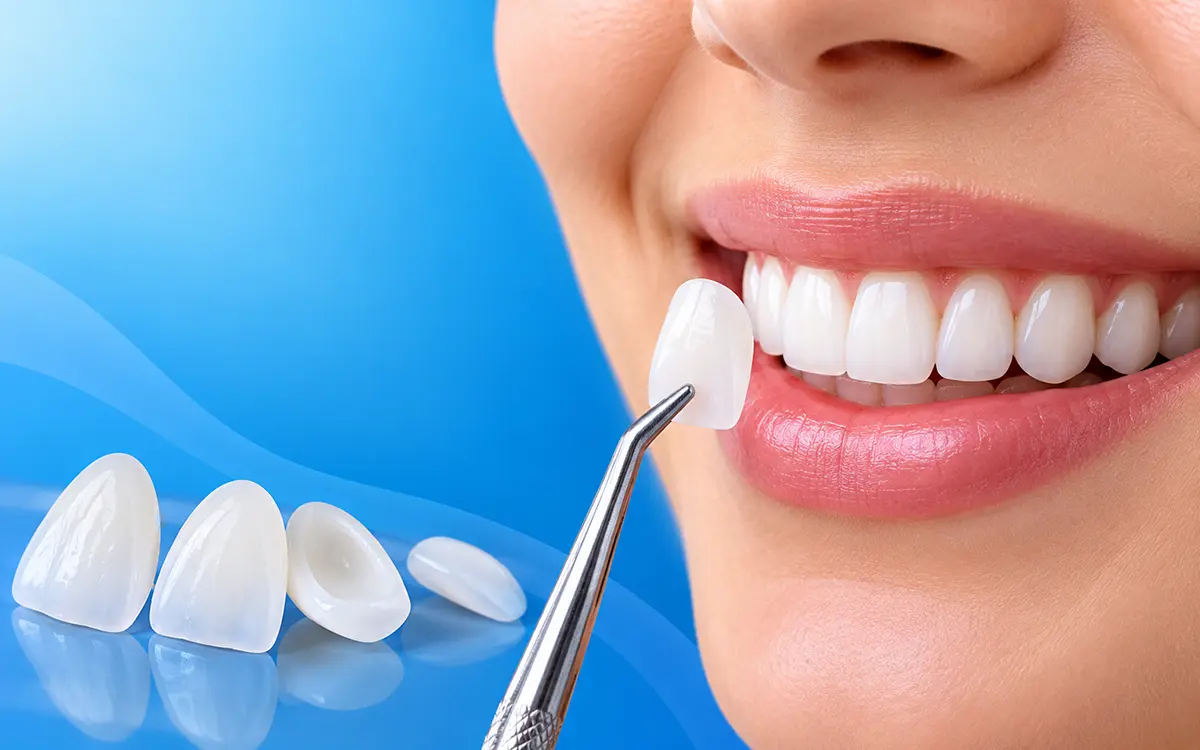
A dental veneer is a thin shell, usually made of ceramic or composite material, bonded to the front surface of a tooth. It is used to improve the shape, size or colour of a tooth, most often the front teeth that show when you smile. Veneers can close small gaps, cover stains, and even out teeth that look chipped or uneven.
When Are Veneers Used?
- Stained or discoloured teeth that do not respond well to whitening
- Chipped or worn front teeth
- Small gaps between the front teeth
- Slightly crooked or uneven teeth, where braces are not wanted or needed
- Teeth that are naturally small or an unusual shape
Types of Veneers
Ceramic (porcelain) veneers
Made in a dental lab to match your natural tooth colour and shine. They resist staining well and typically last longer than composite veneers.
Composite veneers
Built up directly on the tooth by the dentist in a single visit, using a tooth-coloured material. They cost less than ceramic veneers but do not last as long and can stain more easily over time.
How Veneers Are Different From Crowns
A veneer only covers the front surface of a tooth and needs very little of the natural tooth to be trimmed. A crown covers the entire tooth and needs more of the tooth to be reshaped. Veneers are chosen mainly for front teeth where appearance matters most, while crowns are used when a tooth needs more strength, such as after a root canal or with major damage.
How Veneers Are Placed
Ceramic veneers
- Consultation. You discuss the look you want, and your teeth and gums are checked.
- Preparing the tooth. A very thin layer of enamel is removed from the front of the tooth.
- Impression or scan. A mould or digital scan is taken and sent to the lab.
- Temporary veneer. A temporary cover protects the tooth while the permanent one is made.
- Fitting. The finished veneer is checked for fit, colour and bite, then bonded in place.
This usually takes 2 visits over about a week.
Composite veneers
Composite material is shaped directly onto the tooth and hardened with a curing light, usually in a single visit.
Caring for Your Veneers
- Brush twice a day and floss as normal
- Avoid biting very hard foods such as ice or opening packets with your teeth
- Limit tea, coffee, red wine and other staining drinks, especially with composite veneers
- Wear a night guard if you grind your teeth, since grinding can chip a veneer
- Visit your dentist every 6 months
How Long Do Veneers Last?
Ceramic veneers commonly last 10 to 15 years or longer with good care. Composite veneers usually last a shorter time, often 4 to 8 years, and may need polishing or touch-up sooner.
Why Choose OrthoD Hospital for Veneers
- Honest advice on whether veneers, whitening or another option suits your smile best
- Careful colour matching so your veneers blend naturally with your other teeth
- Both ceramic and composite options explained clearly, with their cost and lifespan differences
Veneer Cost
The cost depends on the material chosen, the number of teeth, and the complexity of your case. A written estimate is given after your consultation.
Frequently Asked Questions
Are veneers permanent?
Veneers are long-lasting but not truly permanent, since a thin layer of the natural tooth is usually removed to fit them. Once placed, that tooth will need a veneer or a similar cover going forward.
Do veneers damage your teeth?
Fitting a veneer removes a small amount of enamel. This is why your dentist should examine your teeth and gums carefully first, and explain exactly how much trimming is needed for your case.
Can veneers fix crooked teeth?
Veneers can improve the look of slightly uneven teeth, but they do not move teeth like braces do. For significant crowding or bite problems, orthodontic treatment is the better option.
How many veneers do I need?
This depends on what you want to improve. Some patients choose one veneer for a single chipped tooth, while others choose a full set across the smile for an even look.
Can veneers stain?
Ceramic veneers resist staining well. Composite veneers can stain over time, similar to natural teeth, especially with tea, coffee and smoking.