
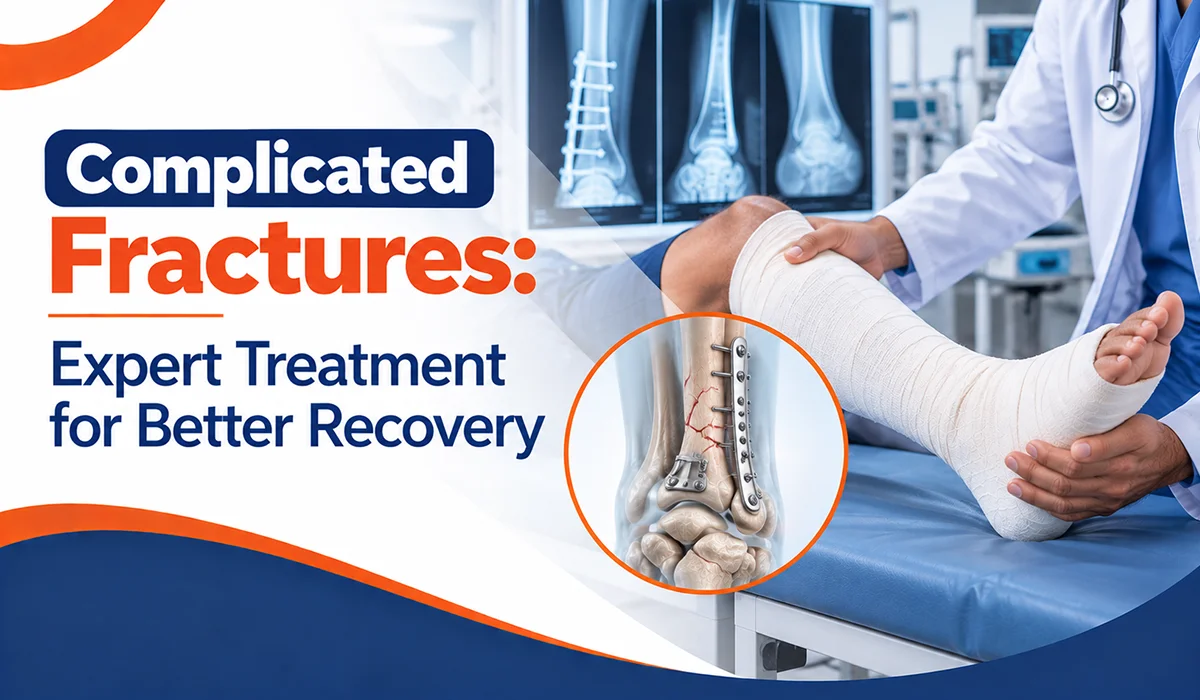
A fracture is a break in a bone that can occur due to accidents, falls, sports injuries, or other traumatic events. While many fractures heal with proper immobilization, some are more severe and require specialized medical care. These are known as complicated fractures, where the injury involves multiple bone fragments, damage to surrounding tissues, joints, blood vessels, or nerves. Prompt diagnosis and expert orthopedic treatment are essential to restore function and prevent long-term complications.
What Is a Complicated Fracture?
A complicated fracture is a severe bone injury that often requires surgical intervention. Unlike simple fractures, complicated fractures may involve:
Multiple broken bone fragments (comminuted fractures)
Open fractures where the bone pierces the skin
Fractures extending into the joint
Bone displacement or misalignment
Damage to muscles, ligaments, tendons, nerves, or blood vessels
These injuries are commonly caused by road traffic accidents, falls from significant heights, industrial accidents, or high-impact sports injuries.
Symptoms of Complicated Fractures
The symptoms can vary depending on the location and severity of the injury. Common signs include:
Severe pain at the injury site
Swelling and bruising
Visible deformity of the affected limb
Inability to move or bear weight
Bone protruding through the skin (in open fractures)
Numbness or weakness due to nerve injury
Excessive bleeding in severe cases
If you experience any of these symptoms after an injury, immediate medical attention is crucial.
Diagnosis
Accurate diagnosis helps determine the best treatment approach. Your orthopedic specialist may recommend:
Physical examination
Digital X-rays
CT Scan for complex fracture patterns
MRI to assess soft tissue injuries
Blood tests if surgery is required
Early evaluation reduces the risk of complications and improves healing outcomes.
Treatment Options
The treatment plan depends on the type, location, and severity of the fracture. Common treatment methods include:
Non-Surgical Treatment
Some stable fractures can be managed with:
Casts or splints
Pain management
Regular follow-up X-rays
Physiotherapy after healing
Surgical Treatment
Many complicated fractures require surgery to restore proper bone alignment. Surgical options include:
Internal fixation using plates and screws
Intramedullary nailing
External fixation devices
Joint reconstruction when necessary
The goal is to stabilize the bone, promote proper healing, and restore normal movement.
Recovery and Rehabilitation
Recovery varies depending on the patient’s age, health, and the severity of the fracture. Rehabilitation is an essential part of treatment and may include:
Guided physiotherapy
Muscle strengthening exercises
Joint mobility training
Gradual return to daily activities
Regular follow-up appointments to monitor bone healing
Following your orthopedic surgeon’s advice significantly improves recovery and reduces the risk of stiffness or long-term disability.
Why Choose Dr. Ruchir Patel?
Dr. Ruchir Patel is committed to providing advanced orthopedic care for patients with complicated fractures. Using modern diagnostic techniques, evidence-based surgical procedures, and personalized rehabilitation plans, he focuses on helping patients recover safely and regain their quality of life. Every treatment plan is tailored to the patient’s specific injury and overall health, ensuring the best possible outcomes.
Schedule Your Consultation
If you or a loved one has suffered a complicated fracture, don’t delay treatment. Early intervention can prevent complications and improve recovery. Consult Dr. Ruchir Patel for expert evaluation, comprehensive fracture management, and compassionate orthopedic care designed to help you return to an active and pain-free life.